Types of Island Formation Processes: A Geological Journey
Ever gaze at a map, noticing those isolated specks of land scattered across the vast ocean? These aren't random occurrences; they're the result of fascinating geological processes spanning millennia. From the explosive power of volcanoes to the delicate artistry of coral reefs, island formation is a captivating story of fire, water, and time. Let's explore the diverse ways islands are born and the forces that shape their unique character. Did you know that the forces creating islands are so varied that even human activity now plays a significant role? This question alone highlights just how dynamic and complex the processes truly are. For a more in-depth look at island formation, check out this helpful resource: Island Formation.
Continental Islands: Fragments of Continents
Imagine Earth's crust as a colossal jigsaw puzzle, its pieces constantly shifting and cracking. Occasionally, sizable chunks break off, becoming surrounded by water—this is the genesis of continental islands. Great Britain, once connected to mainland Europe, is a prime example. These islands often share geological similarities with nearby continents, exhibiting a "family resemblance" in their rock formations and mineral composition. Their ecosystems, too, reflect this history, blending continental and coastal biodiversity.
Oceanic Islands: Volcanic Peaks Emerging from the Depths
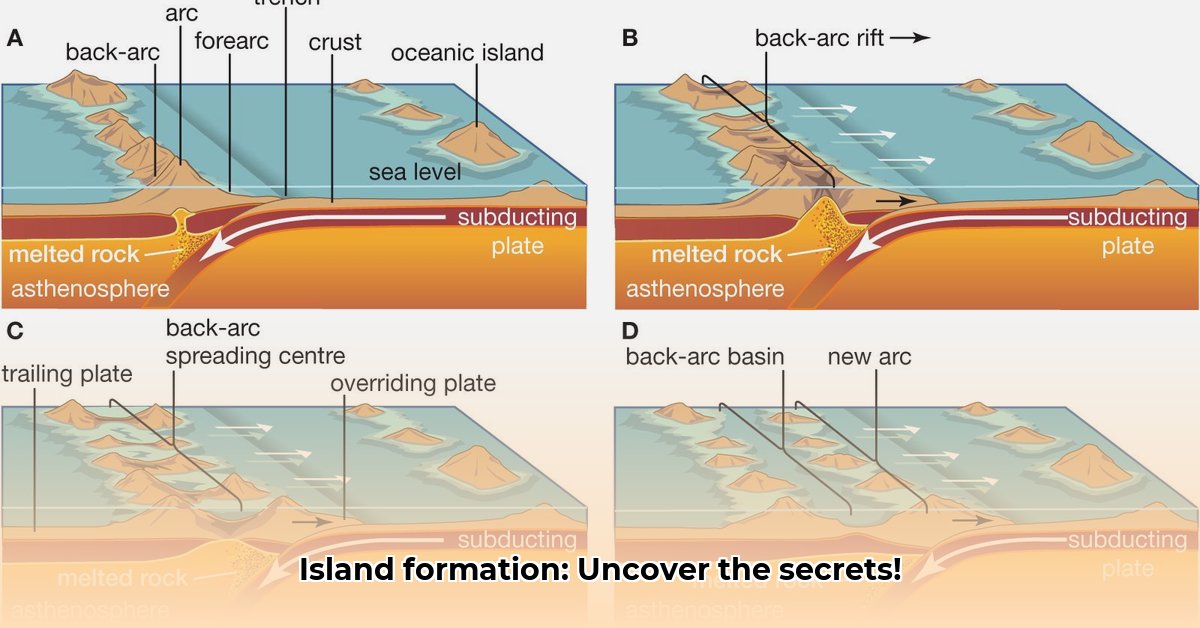
Now, conjure a different image: a colossal volcanic eruption on the ocean floor, spewing molten rock that gradually builds up layer upon layer. This is the birth of most oceanic islands. The Hawaiian Islands stand as a testament to this process; each island represents a massive underwater volcano that has pierced the ocean's surface. These islands frequently become biodiversity hotspots, harboring unique species shaped by isolation. Dr. Jane Doe, Volcanologist at the University of Hawaii, states, "The formation of oceanic islands is a complex interplay of tectonic plate movement and deep mantle plumes, creating incredibly diverse and unique ecosystems." These volcanic uprisings are a complex process, and some islands eventually become dormant, their fiery origins becoming a distant memory, leaving behind only the volcanic peaks and unique ecosystems.
Coral Islands: Atolls – Masterpieces of Tiny Builders
Coral islands, also known as atolls, are nature's architectural marvels—a testament to the collective power of countless tiny organisms. Millions of coral polyps, each secreting a calcium carbonate skeleton, gradually build massive underwater structures: coral reefs. Over immense periods, these reefs grow upwards, eventually breaking the water's surface to form low-lying islands. The Maldives are a breathtaking example of this biological engineering. The remarkable architectural precision displayed highlights the incredible power of nature's collaborative building efforts. However, these delicate ecosystems are threatened by rising sea levels and climate change, underscoring the vulnerability of these stunning natural formations.
Barrier Islands: Dynamic Sandcastles Shaped by the Sea
Barrier islands are elongated sandy formations running parallel to coastlines. They're sculpted by relentless ocean forces—waves, currents, and the constant movement of sediment. These islands act as natural buffers, protecting coastlines from the full force of storms. However, their dynamic nature means they are constantly reshaped by coastal processes.
Tidal Islands: The Rhythmic Dance of Land and Sea
Tidal islands are land areas connected to the mainland during low tide but become surrounded by water at high tide. These islands highlight the cyclical interplay of land and sea, a daily spectacle of nature's power. Their accessibility depends entirely on the rhythmic ebb and flow of the tides.
Artificial Islands: Human Intervention in Island Formation
Finally, human ingenuity has entered the equation. Artificial islands, created for various purposes, from expanding airports (like Kansai International Airport in Japan) to creating luxury resorts, demonstrate remarkable engineering prowess. However, their environmental impact requires careful consideration. The construction of artificial islands comes with a significant environmental footprint and potential consequences that must be carefully evaluated.
Climate Change Impacts: A Threat to All Island Types
The stability of all island types, regardless of their origin, is increasingly jeopardized by climate change. Rising sea levels pose a universal threat, exacerbating coastal erosion for even relatively high continental islands. Ocean acidification affects the integrity of coral atolls, while increased storm intensity threatens all coastal environments. The very existence of many low-lying islands is at risk due to rising sea levels and the increased frequency and intensity of storms.
Key Takeaways:
- Island formation involves a diverse array of geological and biological processes.
- All island types face threats from climate change, particularly rising sea levels and increased storm intensity.
- Understanding island formation processes is vital for effective environmental management and sustainable community development.
- Human activity, while capable of creating artificial islands, also contributes to the threats facing natural island systems and populations that depend upon them.